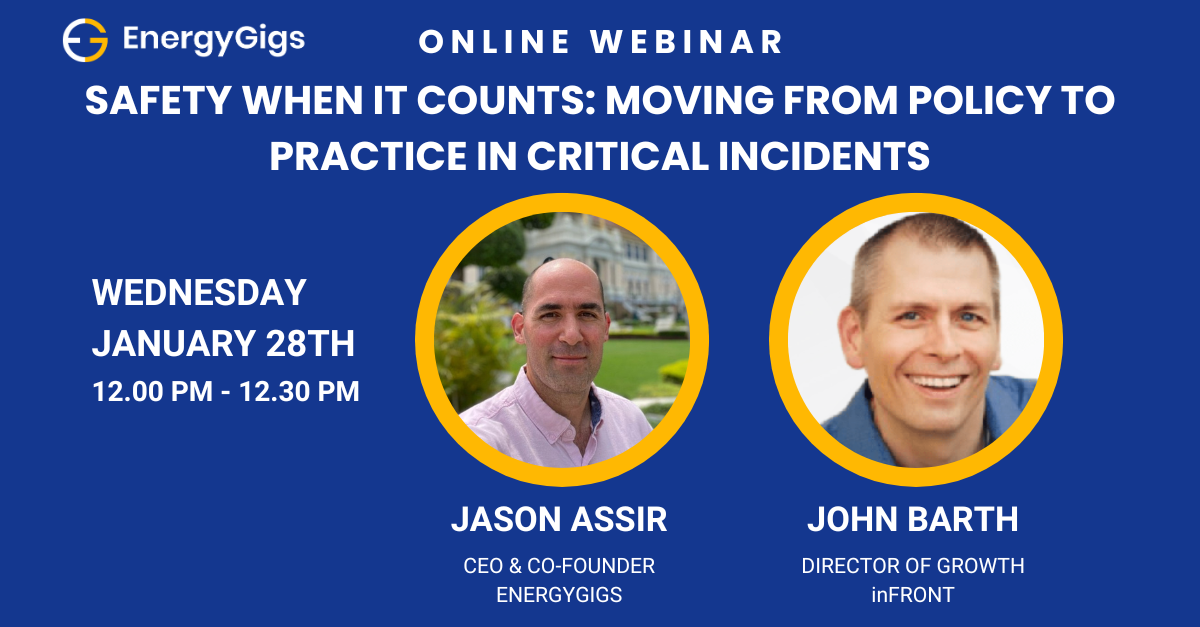
Moving From Policy to Practice in Critical Incidents
When something goes wrong, policies don’t move people, culture does.
In this session, John Barth (Director of Growth at inFRONT) joins Jason Assir (CEO & Co-Founder, EnergyGigs) to unpack what true readiness looks like in high-hazard environments. From 100% headcount in minutes to realistic drills and frontline empowerment, this conversation focuses on actions teams can take before an incident so outcomes are better during one.
Watch Webinar:
About the guest:
John Barth leads sales, marketing, and business development for AllClear, inFRONT’s emergency-readiness platform. His work focuses on reducing time to accountability, locating and accounting for personnel, and ensuring equipment and response processes are ready before they’re needed.
What we covered:
Beyond compliance: Checklists are a start; muscle memory makes the difference. If people haven’t practiced, process won’t stick during stress.
Culture under pressure: You can “read” a site’s safety culture—housekeeping, guard orientation, working turnstiles, and how people are treated at muster all show whether safety is lived or laminated.
Rapid accountability: Why “100% accounted for in 15 minutes or less” matters, and why radios + clipboards struggle at scale—especially with contractors on site.
Turnarounds & LNG reality: Shutdown/startup increase risk; contractor surges magnify confusion. Bake emergency readiness into turnaround plans and budgets.
Leaders & frontline: Leadership needs time in the plant; frontline teams need a real stop-work voice and a clear path to flag issues.
Drills that work: Short, frequent, scenario-based drills > rare, disruptive marathons. The goal is speed, calm, and clarity when it counts.
Practical moves you can make this quarter:
Schedule cadence drills (15–20 minutes, monthly): rotate scenarios; include non-responders and WFH staff.
Map your accountability flow end-to-end: entry data → muster → confirmation → family communications. Identify manual gaps.
Stress-test during a contractor surge: Can you still reach 100% headcount quickly with 500–1,000 extra badges on site?
Flip the feedback loop: Ask operators, guards, and contractors what actually slows them down during alarms; fix 2–3 items now.
Rehearse leadership comms: Who speaks, when, and with what data? Avoid “we’re all accounted for” until you truly are.