Technical Oversight from Conception to Operation
Energy and infrastructure assets are becoming more complex, more regulated, and more capital-intensive than ever before. From offshore platforms and midstream gathering systems to large-scale infrastructure and international joint ventures, today’s projects operate under intense financial, regulatory, and public scrutiny.
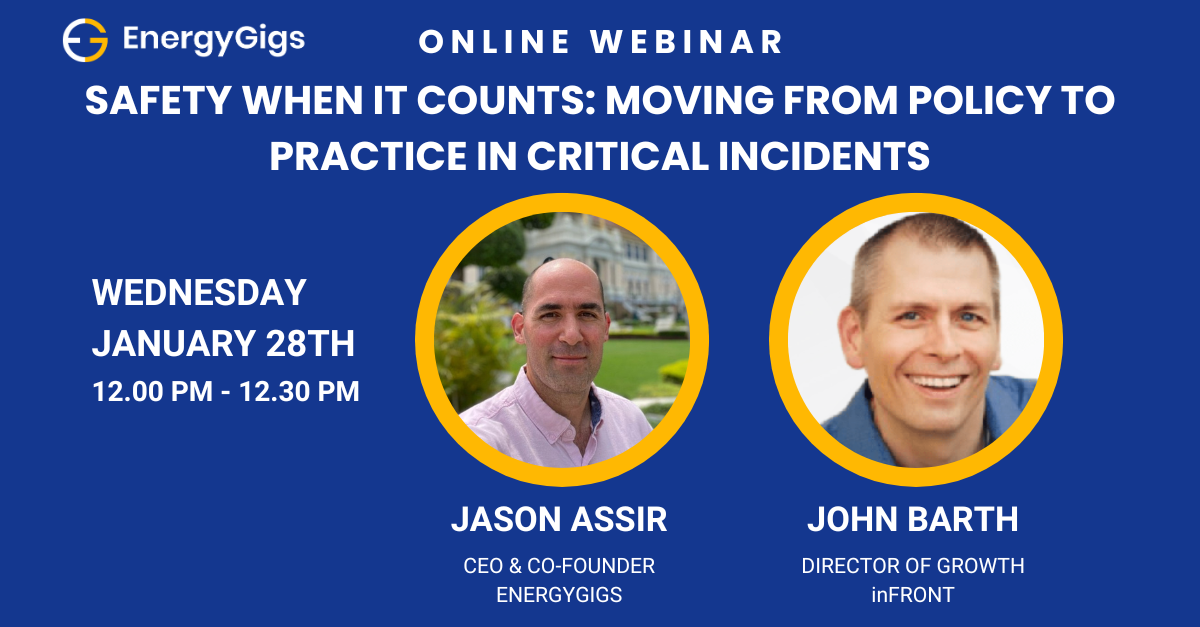
In our latest EnergyGigs webinar, “Optimizing Asset Integrity in Energy Projects: Technical Oversight from Conception to Operation,” Jason Assir, CEO & Co-Founder of EnergyGigs, sat down with Zaid Sultan, Principal, and Heath Whitaker, Managing Director at SOCOTEC USA, to explore how independent technical oversight helps safeguard ROI, performance, and long-term sustainability across the full asset lifecycle.
Watch Webinar:
What Is Integrity Monitoring, and Why Does It Matter?
At its core, integrity monitoring is about protecting return on investment. Every stakeholder on a capital project — owners, developers, lenders, contractors, regulators — wants a successful outcome. But ROI can be eroded by:
– Fraud, waste, and abuse
– Poor documentation
– Weak change management
– Inadequate project controls
– Disputes and litigation
– Regulatory findings
As Heath Whitaker explained, integrity monitoring uses existing project data and operational signals to flag risks early, allowing teams to mitigate issues before they escalate into financial loss or reputational damage.
Importantly, this approach is scalable. It applies to mega-projects worth billions as well as smaller capital developments. The complexity may vary, but the need for transparency and oversight does not.
Common Pain Points on Capital Projects (That Don’t Make Headlines)
Not every issue becomes a Wall Street Journal story. In fact, most don’t.
The overwhelming majority of integrity issues are not dramatic fraud cases. Instead, they tend to be:
– Weak cost estimates
– Poor planning assumptions
– Inadequate documentation
– Change orders not properly recorded
– Miscommunications between stakeholders
– Insufficient segregation of duties
As Heath noted, quality of estimating and change management are foundational. If you start with flawed assumptions or unclear controls, small errors can compound quickly.
Zaid added another major cost driver: litigation. Even disputes below headline-making thresholds can trigger expensive external counsel, expert witnesses, and prolonged conflict that erodes project margins.
The Expanding Role of Data Analytics and AI
The conversation also explored how data and AI are reshaping integrity monitoring.
Historically, project teams relied on monthly reports or lagging indicators. By the time risks were visible, they had often already escalated. Today, AI and advanced analytics enable:
– Real-time anomaly detection
– Custom tolerance thresholds for cost and schedule
– Automated flagging of documentation gaps
– Faster insight into procurement irregularities
– More precise, decision-ready reporting
Heath compared it to sports feedback: instead of waiting weeks to analyze performance, teams can now adjust in real time.
The key is not overwhelming leadership with data — but tailoring insights to the project’s priorities, whether schedule-driven, cost-driven, or compliance-sensitive.
Career Pathways in Integrity Monitoring
For professionals interested in entering this space, Zaid and Heath highlighted several foundational skills:
Technical Foundations:
– Accounting and finance literacy
– Project management fundamentals
– Understanding of capital project controls
-Familiarity with contract structures
Critical Intangibles:
– Clear, persuasive writing
– Strong presentation skills
– Ability to explain complex data to non-technical audiences
– Curiosity and willingness to learn across disciplines
Heath emphasized not being afraid to step outside your background — whether reading contract law, learning how to interpret engineering drawings, or expanding industry knowledge.
Zaid added a practical piece of advice: proximity matters. Learning alongside experienced professionals accelerates development in ways virtual meetings alone cannot replicate.
Final Takeaways
Energy projects are only becoming more complex — technologically, financially, and regulatorily.
Independent technical oversight:
– Protects capital
– Reduces disputes
– Improves transparency
– Enhances documentation readiness
– Strengthens long-term operational resilience
From offshore platforms to Permian gathering systems to international infrastructure builds, asset integrity is not a single control — it is a layered strategy applied across the entire lifecycle.
In Energy, performance, and integrity go hand in hand.